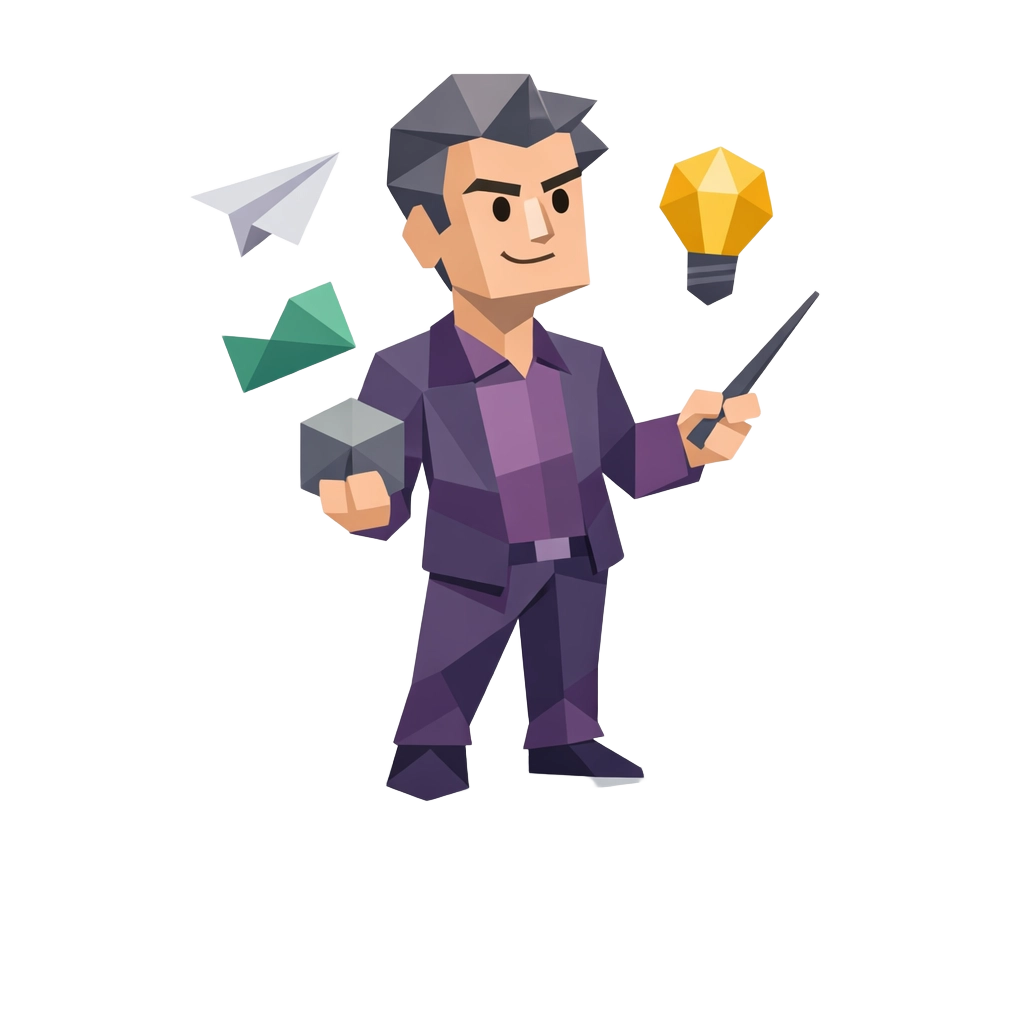
ENTPThe Debater
Quick-witted and audacious, you love intellectual sparring and challenging every assumption.
Cognitive Dimensions
About ENTP — The Debater
ENTPs are the ultimate devil's advocates — sharp, energetic, and endlessly curious about ideas, systems, and people. You approach every conversation as an opportunity to test ideas, challenge assumptions, and explore possibilities that others might dismiss. Your mind operates at remarkable speed, making connections between seemingly unrelated concepts and spotting flaws in arguments that others accept without question. You are not contrary for the sake of it — you genuinely believe that the best ideas emerge from rigorous testing, and you are willing to play devil's advocate to ensure that weak ideas do not survive unchallenged.
Your mind moves fast, connecting dots across seemingly unrelated domains. You are often the person in the room who asks "but what if..." and then proceeds to turn the entire discussion on its head. This makes you incredibly innovative, but it can also make you appear contrarian. You have a gift for seeing systems as they could be rather than as they are, and you are constantly generating new ideas, approaches, and possibilities. Your brainstorming sessions are legendary — you can generate more creative solutions in an hour than most teams produce in a week. The challenge is not generating ideas; it is choosing which ones to pursue and sticking with them long enough to see results.
You are energized by novelty and intellectual challenge. Routine bores you, rules feel like suggestions, and you have a knack for finding creative workarounds to every obstacle. At your best, you are a visionary catalyst who sparks change, inspires innovation, and pushes everyone around you to think bigger and bolder. You bring an energy and optimism to intellectual pursuits that is genuinely infectious, and your ability to reframe problems in unexpected ways makes you invaluable to any team that values innovation. The world needs people who question everything, and that is precisely what you do — with charm, wit, and an irrepressible grin.
Strengths & Growth Areas
Famous ENTPs
Career Paths
Best Compatibility
ENTP in Relationships
In romantic relationships, you are an exciting, intellectually stimulating partner who keeps the relationship fresh with new ideas, adventures, and spirited debate. You are drawn to partners who challenge you mentally and who are not easily intimidated by your rapid-fire intellect. You show love through playful teasing, sharing ideas, and constantly coming up with new things to try together. Boredom is the death of an ENTP relationship, so you work hard to keep things interesting.
You need a partner who is confident, independent, and willing to engage in honest, sometimes heated discussions without taking things personally. You test ideas by arguing them — this is how you think — and a partner who can match your energy in a debate without feeling attacked is gold. You also need someone who gives you freedom to explore your many interests without feeling threatened or neglected.
Your biggest relationship challenge is emotional depth and consistency. You may intellectualize your feelings rather than sitting with them, and your enthusiasm for new experiences can make your partner feel like they are just another novelty. Learning to be emotionally present, to follow through on promises, and to prioritize your partner's emotional needs even when they do not seem logical will transform your relationships from exciting adventures into lasting, deeply satisfying partnerships.
ENTP at Work
You thrive in dynamic work environments that reward innovation, tolerate risk, and do not bog you down in bureaucracy. You are at your best when tackling novel problems, brainstorming solutions, and challenging conventional approaches. You are the person who spots the flaw in the plan, the opportunity everyone else missed, and the creative workaround that saves the project. Your energy and enthusiasm are contagious, and you have a talent for getting people excited about new ideas.
As a leader, you are visionary and charismatic, but you can struggle with the management side of leadership. You love launching initiatives but get bored with maintaining them. Your direct reports may find you inspiring but unpredictable — you might change direction mid-project when a better idea strikes, leaving your team scrambling to keep up. You are best in roles where you can focus on strategy and innovation while others handle implementation.
Your biggest workplace weakness is follow-through. You start more projects than you finish, and routine tasks feel like slow torture. You can also rub people the wrong way with your habit of playing devil's advocate in meetings — not everyone realizes you are testing ideas, not attacking them. Surrounding yourself with detail-oriented implementers who can translate your visions into reality, and developing the discipline to see critical projects through to completion, will dramatically amplify your impact.
ENTP Under Stress
Under extreme stress, your inferior Introverted Sensing (Si) function can manifest in unexpected ways. The usually free-spirited, future-focused ENTP may become fixated on past mistakes, replaying failures in obsessive detail and losing your characteristic optimism. You might develop uncharacteristic anxiety about your health, obsessing over minor physical symptoms and catastrophizing about what they might mean.
Alternatively, you may become rigid and narrow-minded — the opposite of your usual expansive thinking. You might insist on one "right" way of doing things, become inflexible about routines or details, or withdraw from the social interaction that normally energizes you. The usually playful debater becomes irritable, pessimistic, and strangely concrete in their thinking. Recognizing these patterns as stress responses and reconnecting with your dominant Ne — brainstorming, exploring new environments, or engaging in playful conversation with someone you trust — can help restore your natural equilibrium.
Cognitive Functions
Extraverted Intuition is your superpower — you see possibilities everywhere and can generate more ideas in a brainstorm than most people have in a month. You are energized by novelty, patterns, and unexpected connections.
Introverted Thinking provides the analytical framework that gives your ideas substance. You do not just generate possibilities — you test them against internal logic, discarding the ones that do not hold up to scrutiny.
Extraverted Feeling gives you social awareness and charm as you mature. You become increasingly skilled at reading people, building rapport, and understanding that persuasion requires emotional connection, not just logical argument.
Introverted Sensing is your blind spot — you may struggle with consistency, routine, and learning from past experiences. Under stress, you might become fixated on past failures or obsess over physical health concerns.
Communication Style
You communicate with speed, wit, and a conversational style that bounces between topics with dizzying agility. You are natural storytellers and debaters, weaving humor, analogies, and provocative questions into every exchange. Your communication is stimulating but can be overwhelming for those who prefer linear, methodical discussions. You think out loud, which means your spoken ideas are often works in progress — learning to signal when you are brainstorming versus when you have reached a conclusion can prevent misunderstandings.
Growth Tips
Develop the discipline of finishing what you start. Choose fewer projects but commit to seeing them through — completion is where your ideas create real value.
Practice patience with people who think more slowly or methodically than you. Not everyone processes at your speed, and their deliberate approach often catches things your rapid thinking misses.
Learn to distinguish between arguing for understanding and arguing for the sake of winning. Ask yourself whether the debate is serving the relationship or undermining it.
Build consistent habits and routines, especially around health, finances, and important relationships. Structure is not your enemy — it is the launch pad that gives your creativity direction.
Work on emotional presence. When someone shares their feelings with you, resist the urge to analyze or problem-solve. Sometimes the most powerful thing you can do is simply listen and validate.